

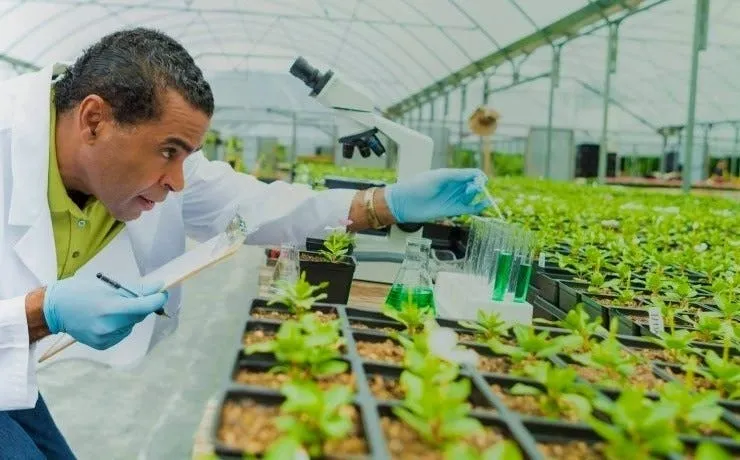
Genetic engineering, a revolutionary tool in modern biotechnology, has significantly impacted crop improvement. And plays a pivotal role in addressing global food security challenges. This blog post meanwhile explores the transformative role of genetic engineering in enhancing crop traits. That areincreasing agricultural productivity, and ensuring a more secure and sustainable food supply once for a growing global population.
Precision Crop Improvement:
Genetic engineering enables precise modification of specific genes within a plant’s genome, allowing scientists to introduce or enhance desired traits. This precision allows for the development of crops with improved resistance to pests, diseases, and environmental stressors, ultimately leading to higher yields and enhanced food security. The ability to target specific genes for modification sets genetic engineering apart as a powerful tool in crop improvement.
Pest and Disease Resistance:
One of the critical contributions of genetic engineering to crop improvement is the development of crops with enhanced resistance to pests and diseases. Through the introduction of genes encoding for natural insecticides or proteins that confer disease resistance. Genetically engineered crops can better withstand attacks from harmful pathogens. This reduces the reliance on chemical pesticides, promoting environmentally sustainable farming practices and ensuring healthier crops with improved yields.
Drought and Stress Tolerance:
In the face of climate change and unpredictable weather patterns, genetic engineering offers a solution to enhance crop tolerance to drought and other environmental stresses. Scientists can introduce genes that improve water-use efficiency, allowing crops to thrive in arid conditions. Additionally, the modification of stress-response genes can confer resilience to extreme temperatures, ensuring stable yields even in challenging climates and contributing to global food security.
Improved Nutritional Content:
Genetic engineering plays a crucial role in biofortification, the process of enhancing the nutritional content of crops. By introducing or enhancing the expression of specific genes responsible for the synthesis of essential nutrients. Genetically engineered crops can address micronutrient deficiencies prevalent in certain regions. Golden Rice, engineered to produce beta-carotene (a precursor of vitamin A). Exemplifies how genetic engineering can contribute to alleviating vitamin A deficiency and improving overall nutritional outcomes.
Increased Crop Yields:
A key objective in crop improvement is to increase yields to meet the growing demand for food. Genetic engineering facilitates the development of high-yielding crop varieties by optimizing traits related to growth, development, and resource utilization. Enhanced photosynthetic efficiency, increased biomass, and improved nutrient uptake are among the targeted traits that contribute to higher yields, ensuring a more abundant and secure food supply.
Accelerated Breeding Programs:
Traditional breeding methods are time-consuming, often requiring multiple generations to achieve desired traits. Genetic engineering expedites the breeding process by allowing scientists to introduce specific traits directly into a plant’s genome. This acceleration enables the development of new crop varieties with desirable characteristics in a shorter timeframe, addressing urgent food security needs and adapting to changing environmental conditions more rapidly.
Resistance to Herbicides:
So genetic engineering has facilitated the development of crops engineered for resistance to specific herbicides. This trait allows for more efficient weed control, simplifying the management of agricultural fields. While controversial due to concerns about herbicide-resistant weeds, this technology has nevertheless contributed to increased crop productivity by ensuring that crops can withstand herbicide applications without suffering damage.
Environmental Sustainability:
Genetic engineering has the potential to contribute to environmental sustainability by reducing the environmental impact of agriculture. Crops engineered for pest resistance can reduce the need for chemical pesticides, decreasing the environmental footprint associated with their application. Additionally, traits such as nitrogen-use efficiency can lead to reduced fertilizer requirements, minimizing nutrient runoff and its negative effects on water ecosystems.
Precision Gene Editing Technologies:
Emerging gene editing technologies, such as CRISPR-Cas9, provide even greater precision in modifying plant genomes. These technologies allow for targeted till changes in specific genes without introducing foreign DNA. The precision and efficiency of gene editing open new possibilities for crop improvement, while enabling scientists to fine-tune traits with unprecedented accuracy and speed.
Global Collaboration and Regulatory Frameworks:
As genetic engineering continues to advance, specifically global collaboration and effective regulatory frameworks are essential. International cooperation in research, development, and sharing of knowledge can accelerate progress in crop improvement. Clear and therefore science-based regulations ensure the responsible and safe deployment of genetically engineered crops, fostering public trust and facilitating their integration into global agriculture for the benefit of food security.
Conclusion:
In conclusion, genetic engineering has emerged as a transformative tool in crop improvement. By overall playing a critical role in addressing global food security challenges. From enhancing pest resistance and significantly improving nutritional content to increasing crop yields and promoting environmental sustainability, genetic engineering offers a suite of solutions for a more secure and sustainable food supply. As technology advances and since global collaboration strengthens, the potential of genetic engineering to contribute to food security in a changing world becomes increasingly significant.